

After summer, damaged hair can hide three very different signs, and each one calls for a different response.
- Rough texture. Often linked to a lack of hydration or to porosity.
- Breaking ends. Mechanical or chemical fragility to assess before any cut.
- Dull colour. Sometimes just residue or an oxidized tone, not a damaged fibre.
Sun, swimming and heat sometimes add to a previous colour. But before recolouring dry damaged hair, it's better to know which of these three signs is really at play.
Why wait before a new colour?
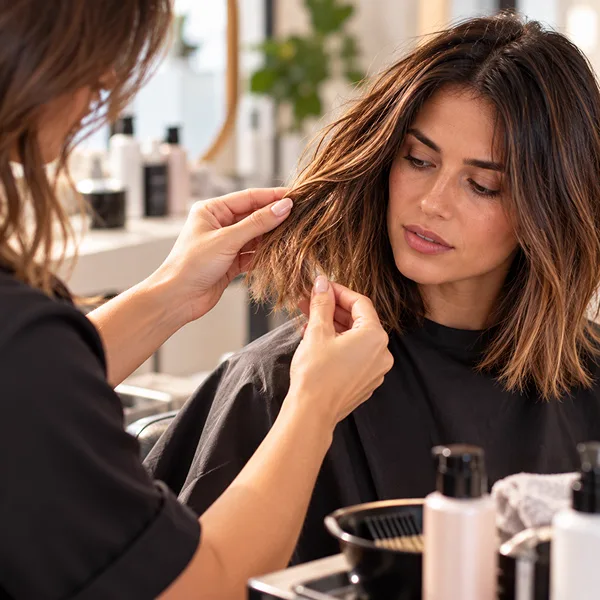
Colour adds a chemical step to your hair's history. Lengths that are already porous can absorb pigment unevenly, which can give a patchy result rather than an even one.
A professional assessment helps you choose between a treatment, a colour adjustment or postponing the project for a few weeks.
Is damage from colour different from summer damage?
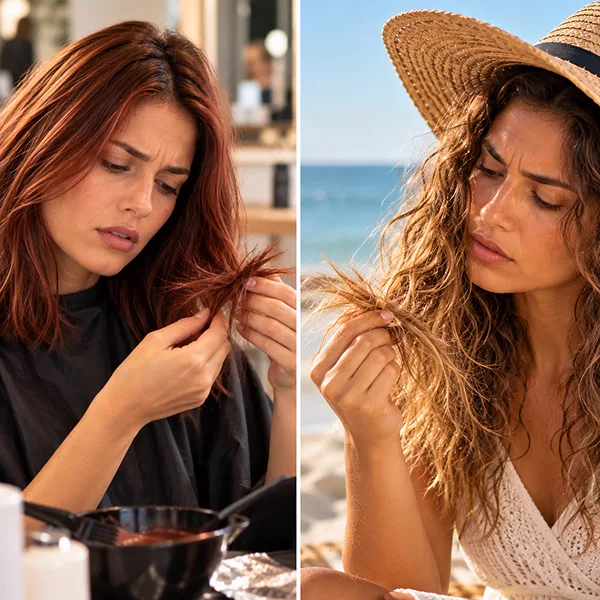
Both causes can seem to produce the same symptoms, dryness, dullness and fragile ends, but they don't call for exactly the same response.
Colour, UV rays, heat, chlorine and salt water can all affect the fibre in different ways, and that's exactly why an assessment helps adapt the approach.
Hair damaged by recent colour often needs recovery time before any new chemical service, even a light one.
When both causes combine, such as colour done just before summer followed by several weeks of sun and salt water, the assessment becomes even more important. It becomes hard to tell, by eye, which damage comes from which cause without examining the fibre itself.
What does a real assessment reveal?
This is exactly what is offered by the 30-minute consultation at Blonnoir : an assessment of the fibre and any buildup, followed by care recommendations based on the real condition of your hair, not a general guess based on the season or how the surface looks.
What should you change in your routine meanwhile?
Handle wet hair gently and space out very hot styling. The American Academy of Dermatology points out in its styling recommendations that wet hair breaks more easily and that too much heat can damage it.
Letting hair partly air dry before using a heated tool reduces some of that risk.
When should you see someone before going further?
A scalp that burns, itches intensely or shows unusual redness after sun or chlorine exposure deserves the opinion of a health professional before any colour appointment.
Sudden, widespread breakage, rather than breakage limited to the ends, can also point to something other than a simple summer effect, such as a reaction to a product. In that case, a salon doesn't replace a medical diagnosis.
A mask can improve softness, but it doesn't rebuild the fibre. The article on the summer hair routine covered protection during the season, while this one covers the next step.
What questions come up most after summer?
How long should you wait before recolouring damaged hair?
It depends on how fragile the hair is. A few weeks are sometimes enough, while very porous hair may need several treatments.
Is a hydrating mask enough to fix breaking ends?
A mask improves softness and appearance, but it doesn't rebuild hair that is already broken. A light trim is sometimes needed as well.
Should you avoid all heat styling during recovery?
Not necessarily all of it, but reducing how often you use heat and lowering the temperature usually helps the process.
How do you prepare your next appointment in Saint-Lambert?
Bring your colour history and, if possible, photos taken before summer. The Kerasilk hair treatment gives an overview of the options available.
Blonnoir offers an express Fusio-Dose treatment, a keratin treatment and several colour services, adjusted once the assessment is done.
Before choosing a new colour, start by taking stock. Book a consultation at Blonnoir to find out if your hair is ready to come back to the salon.